Murale: A Bold Display Font for Web Design
As a web designer, I'm always on the lookout for fonts that can elevate a design without overwhelming it. Murale is one of those rare typefaces that feels both bold and balanced, perfect for bringing energy to digital projects. I recently tested it in a few real-world layouts, and it quickly became a go-to choice for headers and hero sections.
A Dynamic Visual Personality
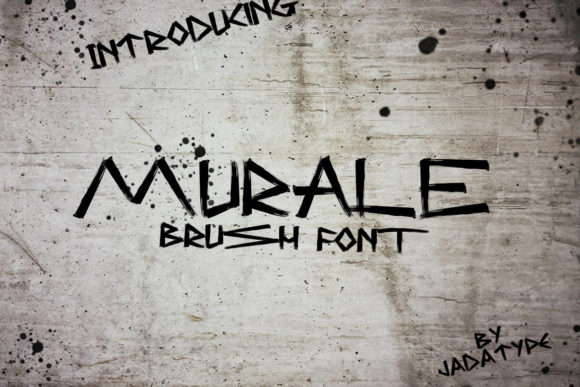
Murale has a dramatic, street art-inspired aesthetic that adds a unique flair to any website. Its sharp edges and strong contrast make it stand out, especially when used in large text sizes. The font feels modern yet edgy, making it ideal for creative portfolios, boutique online stores, or brand identities looking to make a statement.
What sets Murale apart is its ability to convey emotion through typography. Whether it's a bold headline or a playful call-to-action, the font carries a sense of confidence that resonates with users. It’s not just a font—it’s a visual mood booster.
Perfect for Hero Sections and Headers
I first tested Murale in a hero section for a new online store. The font worked exceptionally well as the main headline, drawing attention without being too distracting. When paired with a clean sans serif for the subtext, it created a strong visual hierarchy that guided the user’s eye naturally.
The font also shines when placed over image banners or dark backgrounds. Its high contrast ensures legibility even against complex visuals. I found it particularly effective for landing pages where the goal is to capture attention immediately.
Responsive and Mobile-Friendly
One of my concerns with decorative display fonts is how they perform on smaller screens. Murale, however, holds up surprisingly well. On mobile devices, the font remains readable, especially when used at larger sizes. It doesn’t lose its character, which is a big plus for responsive design.
When testing it on buttons and CTAs, I noticed that the font adds a sense of urgency and excitement. It’s perfect for action-oriented elements like "Shop Now" or "Join Today." Just be sure to keep the text size appropriate for mobile users.
Limitations and Best Practices
While Murale is excellent for headlines and short phrases, it’s not ideal for long paragraphs. The intricate details can make it hard to read in body copy, especially on small screens. For this reason, I recommend using it only for titles, headings, and decorative accents.
It also works best when paired with simpler fonts. I found that combining it with a clean sans serif like Montserrat or Open Sans created a balanced look that felt professional yet creative. This pairing is great for websites that need both style and readability.
Font Pairing and Brand Consistency
When building a brand identity, consistency is key. Murale can be a powerful tool in creating a cohesive look across different digital touchpoints. I used it for a portfolio site and a course sales page, and it helped reinforce the brand’s personality while maintaining clarity.
For a more editorial feel, pairing Murale with a serif font like Lora or Playfair Display can add depth and sophistication. This combination is ideal for blogs, magazine-style sites, or content-heavy platforms that still want a creative edge.
Practical Considerations for Web Use
Before integrating Murale into a project, I always check the available styles and weights. The font comes in multiple variations, which gives flexibility for different design needs. It’s also important to verify that the webfont format is supported and that the licensing allows for commercial use.
Another thing to consider is multilingual support. If the website serves an international audience, ensuring that the font supports all necessary characters is essential. Murale seems to handle most languages well, but it’s always good to test it thoroughly.
Finally, performance is a factor. While Murale is a premium font, it’s important to optimize its loading time to avoid slowing down the site. Using webfont services like Google Fonts or Adobe Fonts can help manage this efficiently.